
When the Story Is Wrong: The Fallout of False Narratives and Administrative Betrayal
The Moment Everything Changes
There’s a moment that happens for a lot of first responders. It’s not on scene. It’s not in the ambulance. It’s not during the call. It comes later. It comes when you realize the story being told about you does not match what actually happened. That’s when the real trauma begins.
I’ve sat across from countless men and women who were prepared for danger. They trained for violence. They expected stress. They understood the job came with risk. What they weren’t prepared for was being erased by a narrative. Because getting hurt in the line of duty is one thing. Being publicly rewritten is another.
When Headlines Replace Humans
False narratives don’t just misinform. They flatten people. They turn complex events into slogans. They strip context. They erase timelines. They reduce lives to talking points. And once that machine starts moving, it does not care who it runs over.
I’ve watched officers become villains overnight. Not because of evidence. Not because of facts. But because a story that traveled faster than truth needed a face.
Here’s what most people don’t see. Behind every viral headline is a family trying to sleep. Behind every trending outrage is a kid asking why people are threatening their dad. Behind every hot take is someone packing their house because they cannot stay in their neighborhood anymore.
False narratives don’t just distort reality. They displace it.
And when the public conversation becomes louder than the facts, nervous systems go into survival mode. That’s when the nightmares start. That’s when marriages strain. That’s when kids develop night terrors. That’s when parents age ten years in twelve months.
This is not abstract. This is lived.
Administrative Betrayal Hits Different
Most first responders understand risk on the street. What they do not expect is abandonment inside their own department.
Administrative betrayal is its own category of trauma.
It happens when leadership goes silent. When investigations drag on without updates. When officers are moved to basements and property rooms instead of supported. When public statements prioritize optics over people. When survival becomes inconvenient.
Being hurt by a suspect is traumatic. Being discarded by your agency after years of service is devastating.
That betrayal hits identity. It hits purpose. It hits the core belief that loyalty goes both ways.
You gave everything to the job. And when it mattered most, the job stepped away.
Trauma Doesn’t End at the Officer
That kind of wound does not show up on an X-ray. It shows up in withdrawal. In hypervigilance. In rage that has nowhere to go. In a quiet grief that settles into the body.
I’ve watched officers who could handle chaos fall apart in waiting rooms. Not because they were weak. Because uncertainty combined with silence is brutal on the nervous system.
Here’s what never makes the press releases.
Spouses becoming full-time emotional regulators.
Kids learning adult-level fear too early.
Parents watching their grown children unravel.
Homes selling under pressure.
Friend groups shrinking.
When one officer is targeted, the entire family absorbs the impact.
The stress does not clock out. It sits at dinner. It rides in the car. It sleeps in the next room.
And when leadership fails to protect its people, families become collateral damage.
Trauma Is Also About What Happened Next
This is why I say trauma is not just about what happened. It’s about what happened next.
The silence.
The distance.
The unanswered emails.
The closed doors.
That’s where long-term damage forms.
I don’t care what side of any issue you stand on. Truth matters. Facts matter. Process matters.
Because when narratives replace evidence, nobody heals. Not officers. Not families. Not communities.
We cannot build recovery on misinformation. We cannot ask people to move forward while pretending they were not steamrolled.
Healing Requires Accountability
Healing requires acknowledgment. It requires accountability. It requires leadership willing to say, “We failed you.”
Without that, people stay stuck. Not because they want to. Because their nervous systems never got the signal that it was safe again.
What we actually need is leadership that shows up when things get ugly. Departments that protect their people while investigations run. Media literacy in a culture addicted to outrage. Space for complexity. A collective reminder that real lives exist behind every headline.
And we need to stop pretending that administrative betrayal is just part of the job.
It isn’t.
It’s a choice.
If This Is You Right Now
If you are a first responder walking through something like this right now, hear me.
You are not crazy for struggling.
You are not weak for feeling angry.
You are not broken because this changed you.
This kind of injury goes beyond the call, and you deserve support that matches the weight of what you’re carrying. Truth is slower than rumor. But it lasts longer, and healing begins when someone finally tells it.
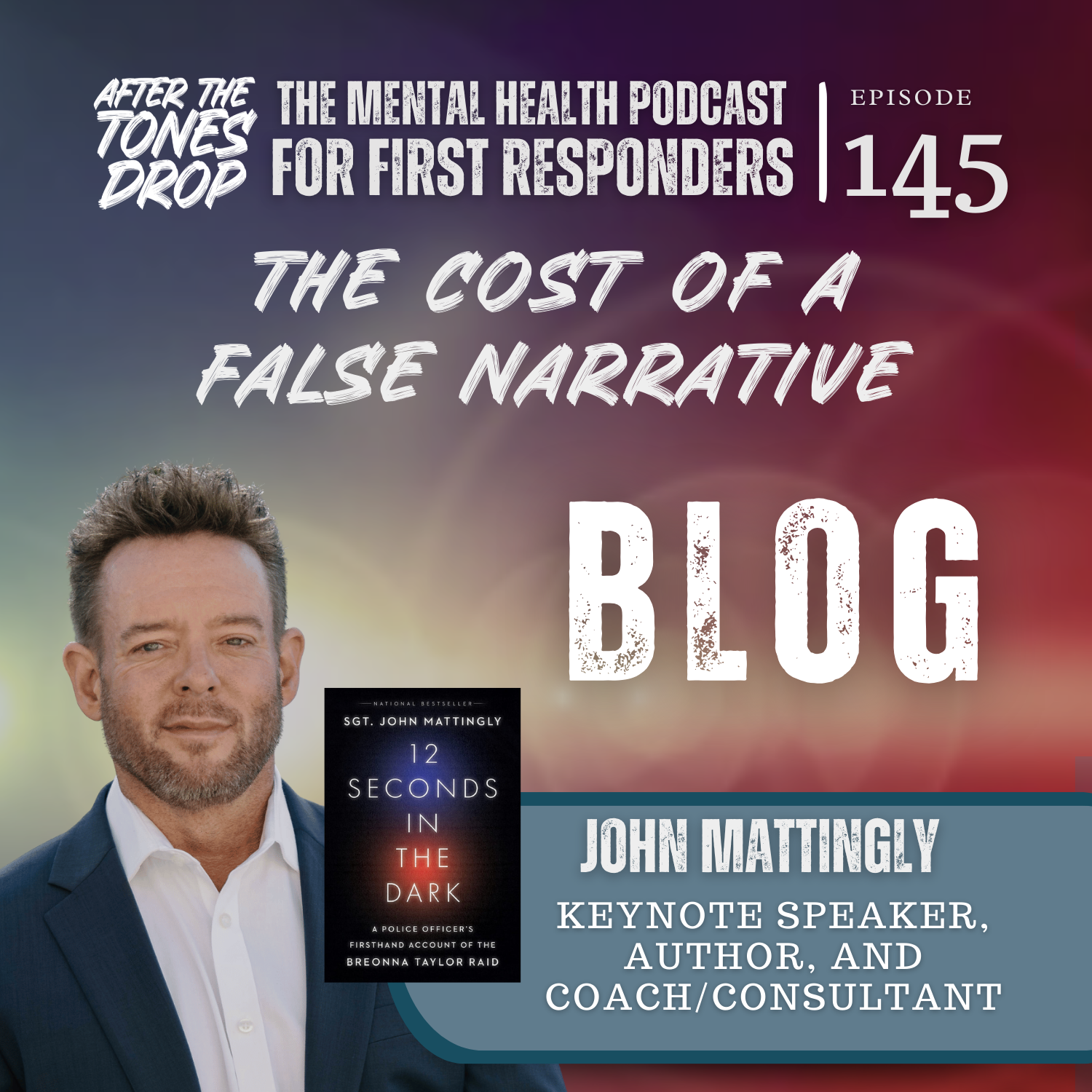
Listen to episode 145 https://www.afterthetonesdrop.co/john-mattingly
If You Want the Truth, Read It From the Source
John Mattingly lived what the headlines got wrong.
His book, 12 Seconds in the Dark, tells the full story. Not the sound bites. Not the social media version. The real human cost of that night and everything that followed.
This isn’t just a book about a critical incident. It’s about what happens when truth gets buried, when leadership disappears, and when a family is forced to carry consequences they never earned.
If you care about justice, accountability, or what first responders actually endure behind closed doors, read it.
You can order John’s book directly here:
Let yourself hear the story from the man who survived it.
And if there’s one thing I hope this leaves you with, it’s this:
Slow down before you judge.
Question the narrative.
Protect the people who serve.
Truth matters. And John’s story deserves to be heard.


Host
Cinnamon has spent over 25 years in the trenches of trauma work—but for the last eight, she’s been all-in with one mission: making sure the people who run toward chaos have somewhere to land when the dust settles.
She’s a trauma therapist, a trainer, and a national speaker on first responder mental health. From firehouses to squad rooms to conference stages, she shows up with honesty, respect, and the tools to help responders move from surviving to actually living.
And here? She’s your host.
After the Tones Drop is her raw, unfiltered podcast built for the first responder community. Because staying alive isn’t enough. Her work is about reclaiming life—on your terms.

What Actually Pushes First Responders to the Edge
