
The Firefighter Behind the Gear: Why Wellness Is a Readiness Issue
Firefighters are meticulous about maintenance. They check the rig. They inspect the tools. The service the air packs. They know that if something fails on scene because nobody bothered to maintain it, the consequences can be immediate and brutal.
That mindset makes perfect sense when we are talking about equipment.
It makes a lot less sense when we look at how often the fire service ignores the firefighter behind the equipment.
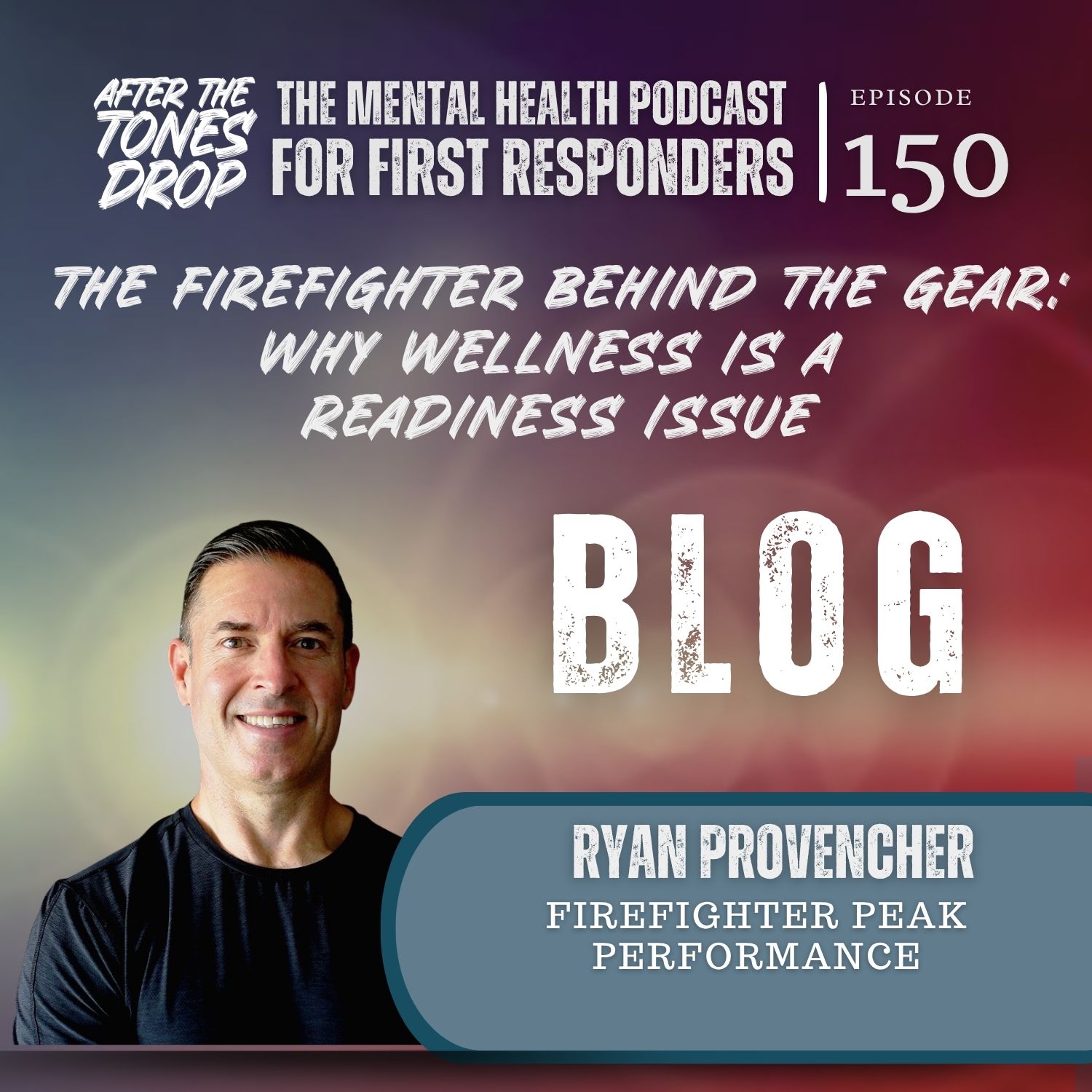
In my conversation with Ryan Provencher on Episode 150 of After the Tones Drop, we talked about something that should not be controversial but somehow still is. Firefighter health, wellness, and mental health are just as important as equipment maintenance. Maybe more important. Because the truth is, the firefighter behind the gear is the most valuable piece of equipment on the fireground.
Maintenance is already part of the culture
Firefighters understand maintenance better than most professions. Nobody waits until a ladder fails to check it. Nobody wants to find out on a call that the SCBA has not been serviced, the truck was not inspected, or the tools were not ready. The culture is built around the understanding that maintenance protects lives.
But when it comes to the people doing the job, that same discipline often disappears. Fatigue becomes normal. Chronic pain gets shrugged off. Stress becomes background noise. Emotional shutdown gets mistaken for toughness. Burnout gets treated like a personal weakness instead of a predictable outcome of a demanding job with poor recovery.
That is where the problem starts.
Ryan’s perspective matters because he is not talking about wellness from the outside. He is talking about it as someone who knows the job and knows the cost of neglecting the people doing it. Firefighters are expected to perform at a high level under pressure, in dangerous conditions, with limited sleep, irregular schedules, and repeated exposure to trauma. Then we act surprised when their bodies break down, their relationships suffer, or their mental health takes a hit.
That is not a mystery. That is what happens when maintenance gets skipped.
Healthy firefighters perform better
This is not just about whether people feel good. It is about whether they can do their job well.
When firefighters are exhausted, dehydrated, carrying chronic inflammation, or running on an overloaded nervous system, performance suffers. Decision-making slows down. Patience shortens. Situational awareness narrows. Communication gets sloppy. Recovery takes longer. Injury risk goes up.
None of that is abstract. It is operational.
A department can have excellent equipment and still be underperforming if the people using it are worn down. Ryan makes a compelling case that wellness is not some optional side category departments can address when they have extra time or money. It belongs in the same conversation as readiness, performance, staffing, and safety.
That also means mental health belongs in the same conversation.
A firefighter carrying unresolved stress or trauma is not failing. But they are still carrying something that affects how they show up. The fire service has spent a long time rewarding the appearance of toughness. What it has not done well enough is recognize that recovery, emotional regulation, and mental resilience are part of the job too.
Departments set the standard
One firefighter working out on their own, trying to eat better, and getting serious about recovery matters. But if the culture around them still glorifies exhaustion, poor sleep, overwork, and silence, they are swimming against the tide.
Departments set the tone for what gets normalized.
If leaders treat wellness like a side project, crews will too. If leaders make it part of the standard, the culture starts shifting. That does not mean every firefighter suddenly becomes a fitness fanatic or starts talking about mental health at lineup. It means the department starts acting like the human body and brain matter just as much as the tools in the compartment.
Ryan’s work pushes on that exact pressure point. He is asking the fire service to stop acting like health and readiness are separate conversations. They are the same conversation.
If the expectation is that firefighters need to be physically capable, mentally sharp, emotionally steady, and operationally effective, then departments need to support the habits that make that possible. Recovery. Fitness. Sleep. Nutrition. Mental health support. Injury prevention. Peer accountability. All of it.
Not because it is trendy. Because it works.
The takeaway
The fire service already knows how to think in terms of maintenance. It just needs to apply that thinking to the firefighter.
You maintain what matters. You inspect what matters. You service what matters before it fails.
That principle should not stop at the apparatus bay.
If departments want stronger crews, better performance, fewer preventable injuries, and healthier careers, then firefighter wellness has to stop being treated like an extra. It is part of readiness. It is part of safety. It is part of the standard.
Listen to the full episode with Ryan Provencher here:
https://www.afterthetonesdrop.co/ryan-provencher


Host
Cinnamon has spent over 25 years in the trenches of trauma work—but for the last eight, she’s been all-in with one mission: making sure the people who run toward chaos have somewhere to land when the dust settles.
She’s a trauma therapist, a trainer, and a national speaker on first responder mental health. From firehouses to squad rooms to conference stages, she shows up with honesty, respect, and the tools to help responders move from surviving to actually living.
And here? She’s your host.
After the Tones Drop is her raw, unfiltered podcast built for the first responder community. Because staying alive isn’t enough. Her work is about reclaiming life—on your terms.
The Trauma Vault: Why First Responders Hide Pain Until It Almost Kills Them
