From Crisis to Connection
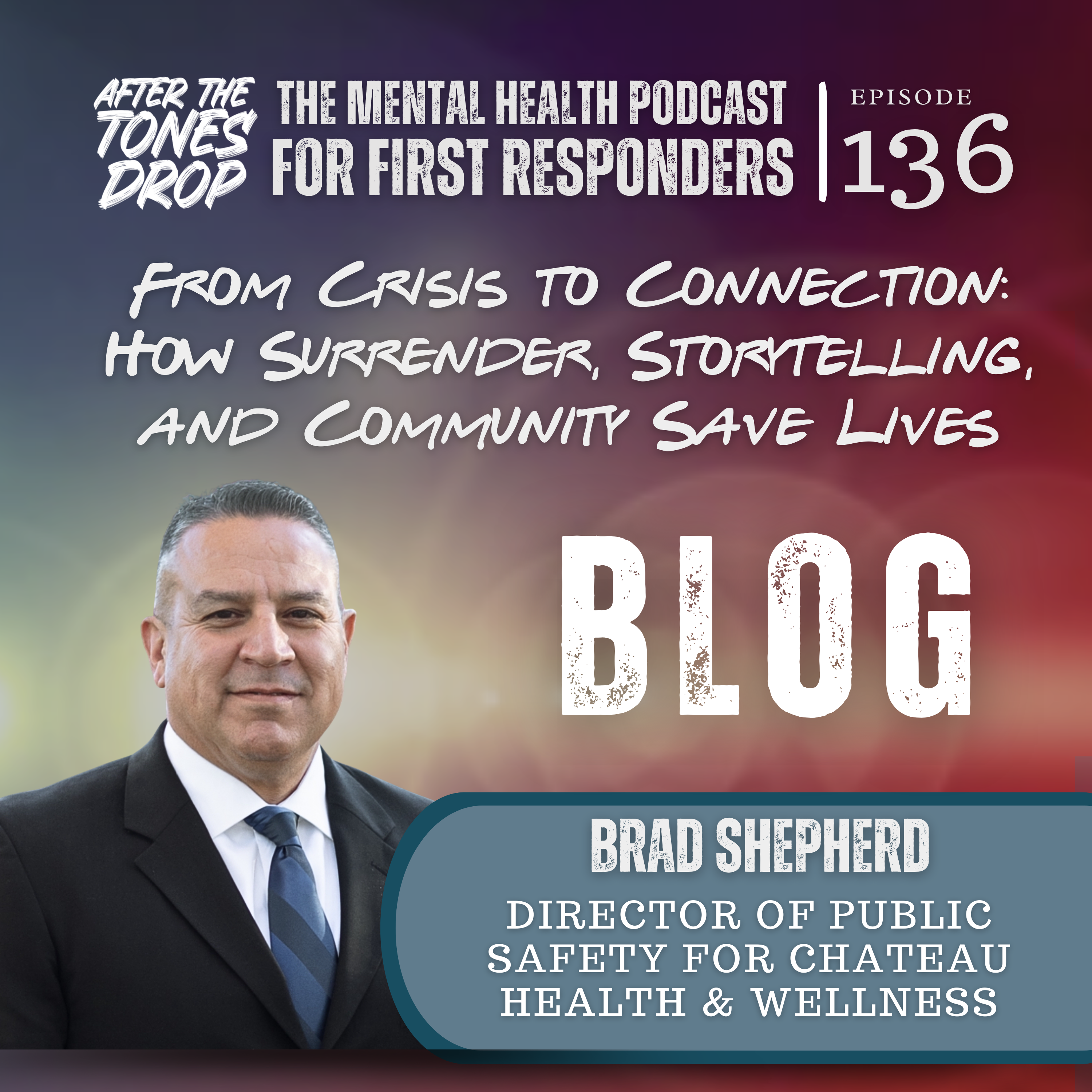
How Surrender, Storytelling, and Community Save Lives
When you spend years on the front lines, crisis becomes part of the job description.
You learn how to run toward chaos. You learn how to stay calm when everything around you is breaking. You learn how to carry things most people will never see, never hear, never fully understand.
But no one really teaches you what to do when the crisis is inside you.
In this episode of After the Tones Drop, I sat down with retired Oklahoma Highway Patrol Captain Brad Shepard, and what unfolded was one of the most honest, sobering, and hope-filled conversations we have had on this show. Brad’s story isn’t just about law enforcement, recovery, or peer support. It’s about what happens when everything you thought defined you falls apart and you’re forced to decide whether you’re going to isolate… or reach for connection.
The Gift of Crisis
Brad opens our conversation with a line that stopped me in my tracks:
“You have been offered the gift of crisis… to shake out the excesses and leave only what’s important.”
That word, gift, feels uncomfortable when you’re talking about alcoholism, betrayal, loss, and despair. But Brad isn’t speaking from theory. He’s speaking from lived experience.
After a long career with the Oklahoma Highway Patrol, building peer support teams and leading a nonprofit dedicated to helping first responders, Brad found himself in a season where everything unraveled at once. Trauma stacked on trauma. Loss compounded loss. The weight of years of vicarious trauma finally demanded to be acknowledged. Brad used alcohol to cope until the excessive drinking became the domino that made everything fall apart.
And then came the betrayal.
Being fired from the nonprofit he helped build. Feeling abandoned by people he thought were his community. Watching his peer support system disappear when he needed it most.
That’s when the crisis stopped being professional and became deeply personal.
Surrender Isn’t Weakness
One of the most powerful themes in this episode is surrender.
Not the kind that looks like giving up, but the kind that looks like finally letting go of the illusion that you can carry everything on your own.
Brad shared something his AA sponsor told him that first responders desperately need to hear:
“Why are you trying to control something you never had control over to begin with?”
For people who are trained to take command in emergencies, surrender can feel like failure. But in reality, it’s the beginning of recovery.
Brad talks about surrender as a daily practice. Sometimes hourly. Sometimes minute by minute. Choosing, again and again, to stop fighting reality and start accepting help.
“It’s okay to not be okay,” he said. “It’s just not okay to stay there.”
That distinction matters.
The Power of Storytelling
One of the most heartbreaking parts of Brad’s story is the silence he encountered when he finally reached out for help.
After years of showing up for others, after building systems designed to support first responders, he found himself alone. Calls unanswered. Messages ignored. Doors closed.
But then something unexpected happened.
A Marine Corps friend called him out of the blue and took him to his first AA meeting. In that room full of strangers, Brad found something he hadn’t found anywhere else.
Acceptance.
Connection.
People who didn’t need him to be the strong one. People who didn’t need his résumé. People who just needed him to be honest.
“That was the group that saved my life,” Brad said.
And it happened because he told his story.
Storytelling isn’t about oversharing. It’s about breaking the isolation. It’s about creating space for someone else to say, “Me too.” In first responder culture, silence is often mistaken for strength. But silence is where shame grows. Stories are where healing begins.
Community Is the Antidote
If surrender is the doorway and storytelling is the bridge, community is where healing actually happens.
Brad is clear about this. Recovery does not happen alone.
Peer support teams matter. Safe spaces matter. Honest conversations matter. Not just after critical incidents, but as a regular part of life.
“You are not alone,” Brad says. And it’s not a platitude. It’s a lifeline.
He also challenges us to think bigger. To raise the next generation differently. To give our kids, especially our boys, an emotional vocabulary so they don’t grow up believing the only acceptable emotion is anger or silence.
Isolation doesn’t start in adulthood. It’s taught early. And it can be unlearned.
Turning Pain Into Purpose
One of the things I respect most about Brad is that he doesn’t romanticize his recovery. He doesn’t claim to have arrived. He shows up. He stays honest. He keeps doing the work.
And he asks the question that matters most:
“Can my story help somebody else in their dark moment?”
That’s the heart of this episode. Pain doesn’t disqualify you from helping others. Sometimes it’s the very thing that makes you capable of it.
If You’re Reading This and Struggling
I want to be clear about something.
If any part of Brad’s story feels familiar, if you’re carrying more than you’re letting on, if you’ve convinced yourself that no one would understand, hear this:
You are not alone.
You don’t have to surrender your career, your identity, or your worth. You just have to surrender the idea that you have to do this by yourself.
Tell your story. Even if your voice shakes. Especially if your voice shakes.
Find your people. And if you don’t know where to start, start by listening. This episode exists because someone chose honesty over isolation.
And that choice saves lives.
https://www.chateaurecovery.com/

Host
Cinnamon has spent over 25 years in the trenches of trauma work—but for the last eight, she’s been all-in with one mission: making sure the people who run toward chaos have somewhere to land when the dust settles.
She’s a trauma therapist, a trainer, and a national speaker on first responder mental health. From firehouses to squad rooms to conference stages, she shows up with honesty, respect, and the tools to help responders move from surviving to actually living.
And here? She’s your host.
After the Tones Drop is her raw, unfiltered podcast built for the first responder community. Because staying alive isn’t enough. Her work is about reclaiming life—on your terms.
The Firefighter Behind the Gear: Why Wellness Is a Readiness Issue