How Frontline Strong Supports First Responder Mental Health
What Happens When Help Is Finally Built for First Responders
Most first responders do not avoid help because they are weak.
They avoid it because the system has taught them not to trust it.
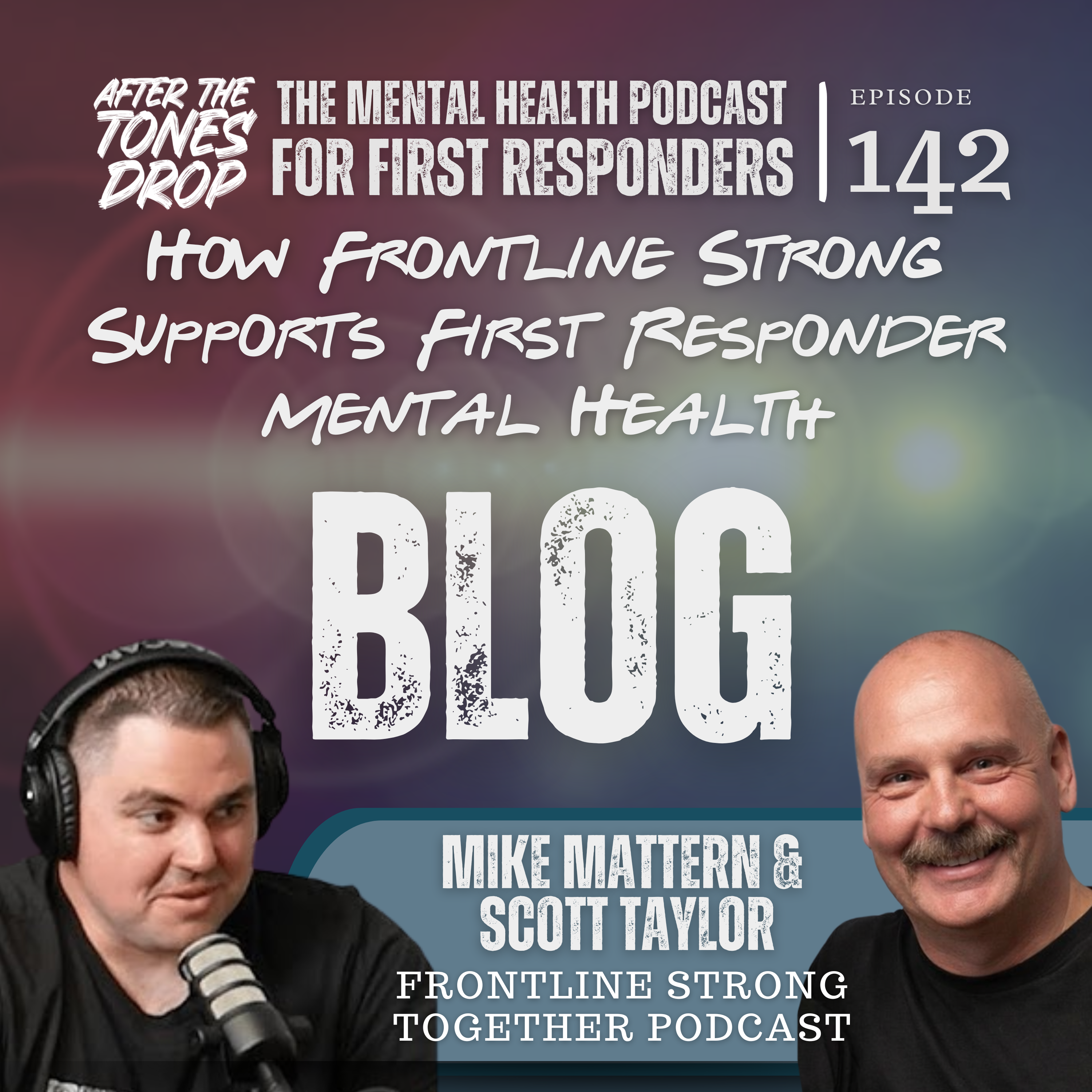
I have sat with too many people who waited until the wheels came off. Not because they wanted to suffer, but because asking for help felt more dangerous than staying quiet. That is why this conversation with Mike Mattern and Scott Taylor from Frontline Strong Together matters.
This episode is not about theory. It is about what happens when support is built by people who actually understand the job.
The Real Problem Is Not Trauma. It Is Isolation.
Mike and Scott both spent decades in law enforcement. They did not walk into this work because they were broken. They walked into it because they were capable. Strong. Reliable. The ones others leaned on.
And like so many first responders, they normalized things that should have raised alarms. Excessive drinking. Relationship fallout. Chronic stress. Emotional shutdown. Not because they did not care, but because everyone around them was doing the same thing.
When trauma becomes routine, silence becomes survival.
What Frontline Strong Together figured out early is this: people do not need to be convinced that the job is hard. They need permission to talk about what it is doing to them without fear of being judged, labeled, or sidelined.
That is why their crisis line is staffed by first responders. That is why their peer teams are built from lived experience. Credibility matters. Shared language matters. Being understood without having to explain yourself matters.
Prevention Works Better Than Cleanup
One of the most powerful things Mike and Scott talked about was timing.
Most departments wait until something breaks. A suicide. A disciplinary issue. A critical incident that forces intervention. By then, the damage is already deep.
Frontline Strong Together works upstream. They teach recruits before the culture hardens. They sit in academies before the messaging gets warped. They name what this job will cost you if you pretend it will not.
And here is the thing. The younger generation is listening.
They are not buying the old narrative that pain equals toughness. They want tools. They want language. They want to know how to stay human and do this work well.
That is not weakness. That is intelligence.
Peer Support Only Works When It Is Real
Peer support fails when it becomes performative. When it is a checkbox. When it is staffed by people who have never carried the weight they are asking others to share.
Mike and Scott are honest about that.
This is kitchen table work. Real conversations. No scripts. No forced vulnerability. No fixing. Just people sitting across from each other saying, yeah, I have been there too.
One of the most important moments in this episode is when Scott talks about teaching suicide prevention and later finding out that someone in the room chose to stay alive because of that training.
That is the impact most people never see. That is why this work matters.
Not because it is flashy. Because it saves lives quietly.
When Access Changes Behavior
Frontline Strong is a Michigan based, state funded mental health program that provides free support to first responders and their families across all five disciplines. Law enforcement, fire, EMS, corrections, and dispatch.
No insurance hurdles.
No out of pocket costs.
No requirement to justify your pain.
And the more I sat with this conversation, the clearer it became. Access itself changes behavior.
When support is easy to reach, people ask for help sooner. When care is normalized, people do not wait until rock bottom. When the system removes barriers, the nervous system softens.
Mike and Scott both shared how they once normalized unhealthy coping. Drinking more than they should. Pushing through things that deserved attention. Believing that needing help meant weakness or failure.
They did not arrive at this work as people who had it all figured out. They arrived as people who had lived the cost of not addressing things early.
That honesty matters. It reminds us that mental health struggles are not a personal flaw. They are a predictable response to cumulative exposure.
The Takeaway
If you are waiting until you hit rock bottom to ask for help, this episode is for you.
If you are leading a department and wondering why people keep burning out, this episode is for you.
If you are trying to build something better with limited resources, this episode is for you.
You do not need a perfect system to start. You need honest people willing to go first.
Listen to Episode 142 of After the Tones Drop with Mike Mattern and Scott Taylor of Frontline Strong Together.
This is what it looks like when support is built by the people who actually understand the cost of the job.
And if you are reading this wondering whether it is okay to take the first step, it is.
The first step is always the hardest.
It is also the one that changes everything.
Listen to Episode 142 of After the Tones Drop to hear this conversation in full. Learn how Frontline Strong works and gather ideas you can take back to your department or community.
Support does not have to wait until everything falls apart.
It can be built before that point arrives.


Host
Cinnamon has spent over 25 years in the trenches of trauma work—but for the last eight, she’s been all-in with one mission: making sure the people who run toward chaos have somewhere to land when the dust settles.
She’s a trauma therapist, a trainer, and a national speaker on first responder mental health. From firehouses to squad rooms to conference stages, she shows up with honesty, respect, and the tools to help responders move from surviving to actually living.
And here? She’s your host.
After the Tones Drop is her raw, unfiltered podcast built for the first responder community. Because staying alive isn’t enough. Her work is about reclaiming life—on your terms.
The Firefighter Behind the Gear: Why Wellness Is a Readiness Issue