Why metaphors like “Let It Go” Is Terrible Advice for Trauma Healing
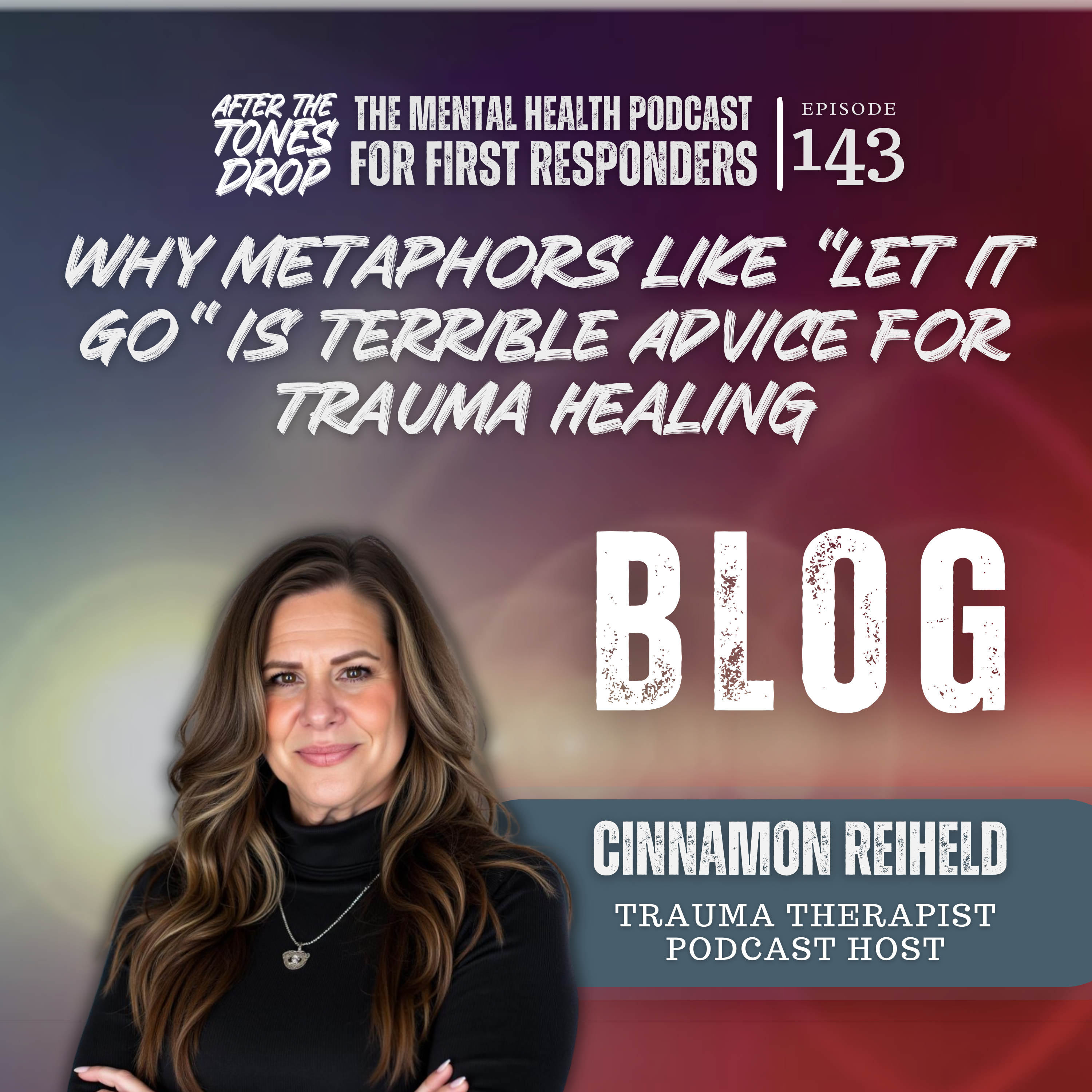
Healing Isn’t Erasure: Why the Words We Use About Trauma Matter More Than We Think
There are certain phrases we say to people who are hurting that sound supportive on the surface but land like a quiet dismissal.
“Let it go.”
“Put it behind you.”
“You should be over this by now.”
“Turn the page.”
Most of the time, these aren’t said with malice. They’re said because we don’t know what else to say. Because discomfort makes us clumsy. Because pain makes us want resolution. Fast.
But here’s the problem. A lot of our healing language is built on the idea that recovery means erasing what happened. And when the past refuses to disappear on command, people start believing they are failing at healing.
They aren’t.
The language is.
I want to talk about why that matters.
The Hidden Message Inside “Helpful” Phrases
When someone is told to “move on,” the unspoken message is that staying impacted means something is wrong with them. When we say “cut the cord,” we imply trauma is a clean connection you can sever neatly. When we say “turn the page,” we pretend the story stops bleeding into the next chapter.
Trauma does not work like that. Grief does not work like that. Nervous systems definitely do not work like that.
I’ve sat with people who have done years of therapy, who have learned the tools, who can regulate and function and show up for their lives, and who still have waves. Anniversaries. Sensory triggers. Random Tuesdays that hit harder than expected.
And instead of compassion, what they often feel is shame.
Shame for still being affected.
Shame for remembering.
Shame for not being “done.”
That shame does more damage than the memory itself.
Why Erasure Is the Wrong Goal
A lot of healing metaphors aim for deletion. As if the highest achievement is to forget. As if success looks like emotional amnesia.
That’s not how healing works. And it’s not how the brain is wired.
The brain is designed to remember things that mattered. Especially things that were dangerous, painful, or life altering. Healing does not mean wiping those memories out. It means changing how much control they have over you.
I often describe it like this.
Early on, trauma lives at face level. It is everywhere. It clouds your vision. It hijacks your breathing. It makes it hard to see anything else.
With time and work and support, that cloud drops. It doesn’t vanish. It moves lower. Down to ankle level. You still feel it. It brushes up against you. But it no longer suffocates you.
That is healing.
Not disappearance.
Not forgetting.
Not pretending.
What Healing Actually Looks Like
Real healing is quieter than people expect.
It looks like noticing a trigger and not exploding.
It looks like sadness showing up without panic.
It looks like remembering something hard without collapsing.
It looks like being able to tell the story out loud and stay in your body while you do.
It looks like grief that revisits, but does not wreck you.
It looks like having a bad day without deciding you are broken.
It looks like awareness without overwhelm.
Healing is not linear. It loops. It spirals. It revisits familiar territory from new angles. And that does not mean you are backsliding. It means your nervous system is integrating.
We do people a disservice when we talk about healing as a finish line. There is no graduation ceremony where you are declared officially unaffected.
There is only capacity. Choice. Regulation. And more room to live.
Why This Matters for First Responders
First responders live in a culture that rewards suppression and speed. Feel it later. Handle it now. Keep moving.
That makes the language we use even more important.
Telling someone to “just move on” after cumulative exposure to trauma is not motivation. It is invalidation. It reinforces the belief that strength equals silence and that needing time means weakness.
I see the fallout of that every day.
People who think they are failing because their nervous system is still reacting. People who believe they should be further along. People who carry unnecessary shame on top of everything they have already survived.
Healing language should reduce load, not add to it.
A Better Way to Talk About Recovery
What if instead of telling people to let it go, we said, “Of course it still shows up. That makes sense.”
What if instead of pushing for closure, we made room for coexistence.
You are allowed to remember and still move forward.
You are allowed to have waves and still be healed.
You are allowed to carry the past without letting it drive.
The goal is not to disappear what happened.
The goal is to live without being ruled by it.
Final Thoughts
If you have ever felt like you were doing healing wrong because the past still taps you on the shoulder, hear this clearly.
You are not broken.
You are not behind.
You are not failing.
You are human. And your nervous system is doing exactly what it was designed to do.
Healing is not erasure.
It is relationship.
It is choice.
It is learning to walk with what happened without letting it steal your breath.
If this resonates, I unpack this more in Episode 143 of After the Tones Drop. It’s a short listen, but it might change how you talk to yourself the next time a wave shows up.
And that matters more than you think.

Host
Cinnamon has spent over 25 years in the trenches of trauma work—but for the last eight, she’s been all-in with one mission: making sure the people who run toward chaos have somewhere to land when the dust settles.
She’s a trauma therapist, a trainer, and a national speaker on first responder mental health. From firehouses to squad rooms to conference stages, she shows up with honesty, respect, and the tools to help responders move from surviving to actually living.
And here? She’s your host.
After the Tones Drop is her raw, unfiltered podcast built for the first responder community. Because staying alive isn’t enough. Her work is about reclaiming life—on your terms.
The Firefighter Behind the Gear: Why Wellness Is a Readiness Issue