Married to the Badge: How to Stay Without Losing Yourself
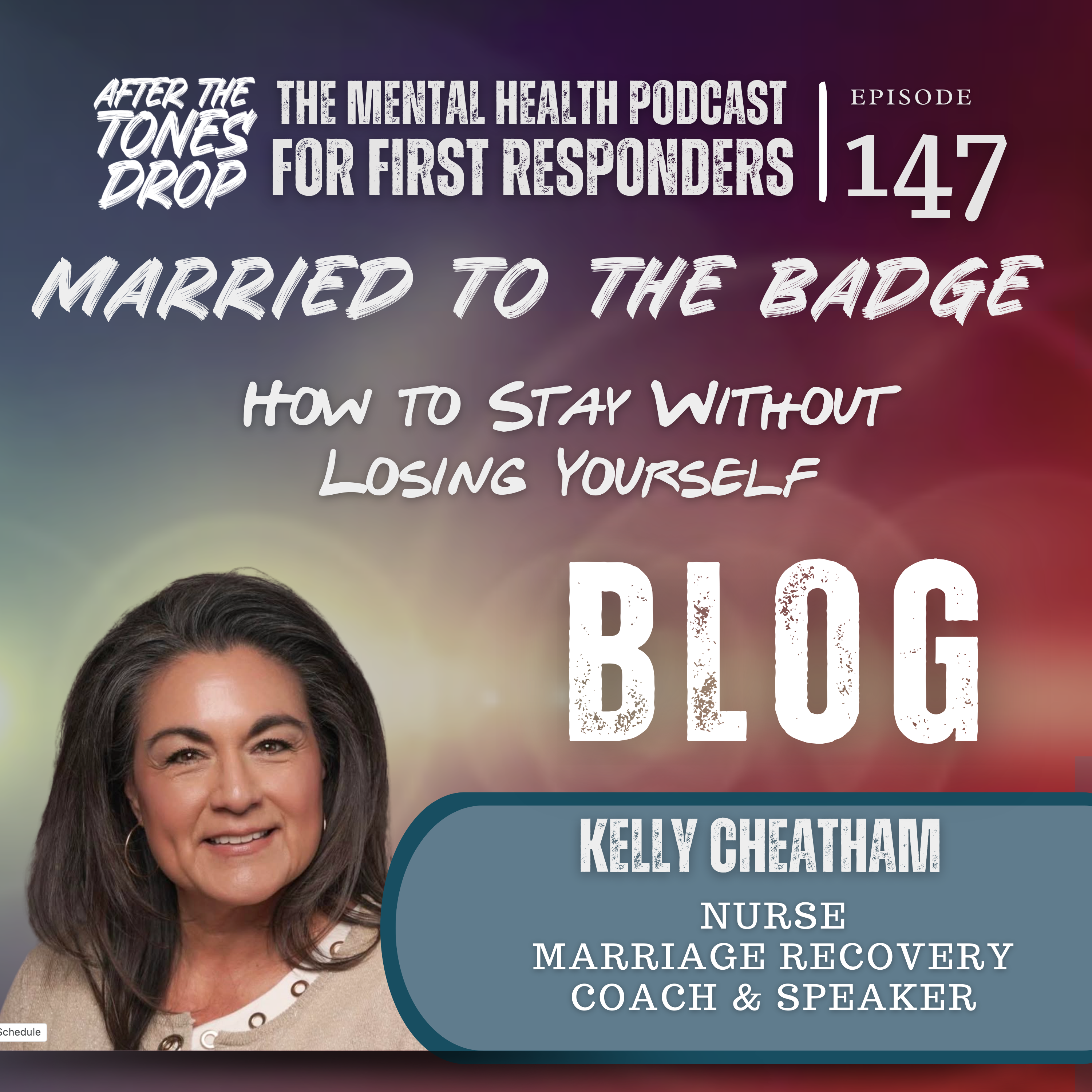
Married to the Badge: How to Stay Without Losing Yourself
When you’re married to a first responder, you already understand the rhythm of the job. The shift work. The emotional compartmentalization. The dark humor. The silence that follows hard calls. What doesn’t get talked about as often is the loneliness that can grow inside that silence.
Kelly Cheatham didn’t marry “the job.” She married a man. But the job shaped him. And when addiction entered their marriage, it collided with the silence she had learned growing up in an alcoholic household. She didn’t grow up with healthy conflict. She grew up with quiet until it became explosive. That pattern followed her into adulthood.
When Silence Becomes the Default
When Rick’s sexual addiction began surfacing, every attempt at communication felt chaotic. Kelly didn’t have the language for what she was feeling. She only knew how to hold it in until she couldn’t anymore.
That silence-then-eruption cycle is common in first responder homes. The profession trains one partner to compartmentalize trauma. Childhood may have trained the other to suppress emotion. What you end up with is two people who don’t know how to talk until everything is already on fire.
Compartmentalization keeps first responders functional at work. At home, it often creates emotional distance. Kelly describes years of secrecy, suspicion, confrontation, and retreat. Every time she tried to express hurt, it escalated. Every escalation pushed them further apart. Like many spouses, she began to internalize it. Maybe I’m too emotional. Maybe I’m overreacting. Maybe this is just how it is.
It doesn’t have to be.
Boundaries Are Not Betrayal
The turning point wasn’t yelling louder. It was getting clearer.
Kelly eventually told Rick that the addiction had to be addressed or she was done. And then she backed that boundary up with action. She went back to school. Not to threaten him, but to secure herself. She chose a profession that would allow her to support her children if the marriage failed. That wasn’t manipulation. That was wisdom.
For twelve years, she rebuilt herself while the marriage was being rebuilt. She learned communication skills she had never been taught. She practiced different responses. She role-played difficult conversations. She stopped replaying the same fight the same way. She focused on controlling her side of the street instead of trying to force change on his.
For first responder spouses, this is essential: boundaries are not betrayal. You can love someone in uniform and still require emotional safety. You can support their mission without sacrificing your identity. You can stay without disappearing.
When Grief Hits the Whole Family
Then the unthinkable happened. Their son Michael was murdered.
Loss at that level doesn’t simply test a marriage. It exposes it. Kelly describes ten months of daily sobbing, hair loss, sleepless nights, and suicidal thoughts. The kind of grief that makes it hard to breathe.
And still, she chose to move forward.
She had just enrolled in her bachelor’s program when Michael died. She considered postponing it. Instead, she started classes after his funeral. When she couldn’t sleep, she studied. When the pain felt overwhelming, she poured it into something constructive. She graduated with honors. Not because she was trying to prove strength, but because she needed a place to put her grief.
She says something in this episode that shifts everything: “I lost my child. That’s the worst thing you’ll ever know about me.”
When you survive that kind of loss, other people’s opinions lose their power. Image becomes irrelevant. Authenticity becomes necessary.
Trauma Comes Home
For first responder families, this is the hard truth. Trauma will come home. Whether it arrives through addiction, emotional shutdown, or catastrophic loss, it will test the foundation of your relationship.
If you don’t deal with it together, it will define you separately.
Kelly chose to go through it. No sidestepping. No sweeping it under the rug. She describes it simply: you head straight through the problem. You bring it into the open. You deal with it. That is what allowed her to find her voice. That is what allowed their marriage to transform instead of collapse.
Staying Without Disappearing
The takeaway for first responder spouses is not “just stay.” It is not “endure at all costs.”
It is this: you need a voice, boundaries, and your own identity. Not because you are preparing to leave, but because you deserve to remain whole.
You cannot fix your spouse’s trauma. You cannot control their choices. But you can control how you respond. You can build emotional safety. You can refuse silence as your only option. And you can choose authenticity over image.
Crisis sifts. It removes illusion. What remains is what matters.
Kelly did not become stronger because life was easy. She became stronger because she stopped avoiding hard conversations. She stopped shrinking. She stopped pretending.
If you love someone in this profession and feel unseen, this conversation is for you. Listen to the full episode and hear what it looks like to stay without disappearing.
Listen to the full Podcast here 👉 https://www.afterthetonesdrop.co/kelly-cheatham

S.T.A.R.T. Where You Stand: Redemption Begins With Responsibility