
S.T.A.R.T. Where You Stand: Redemption Begins With Responsibility
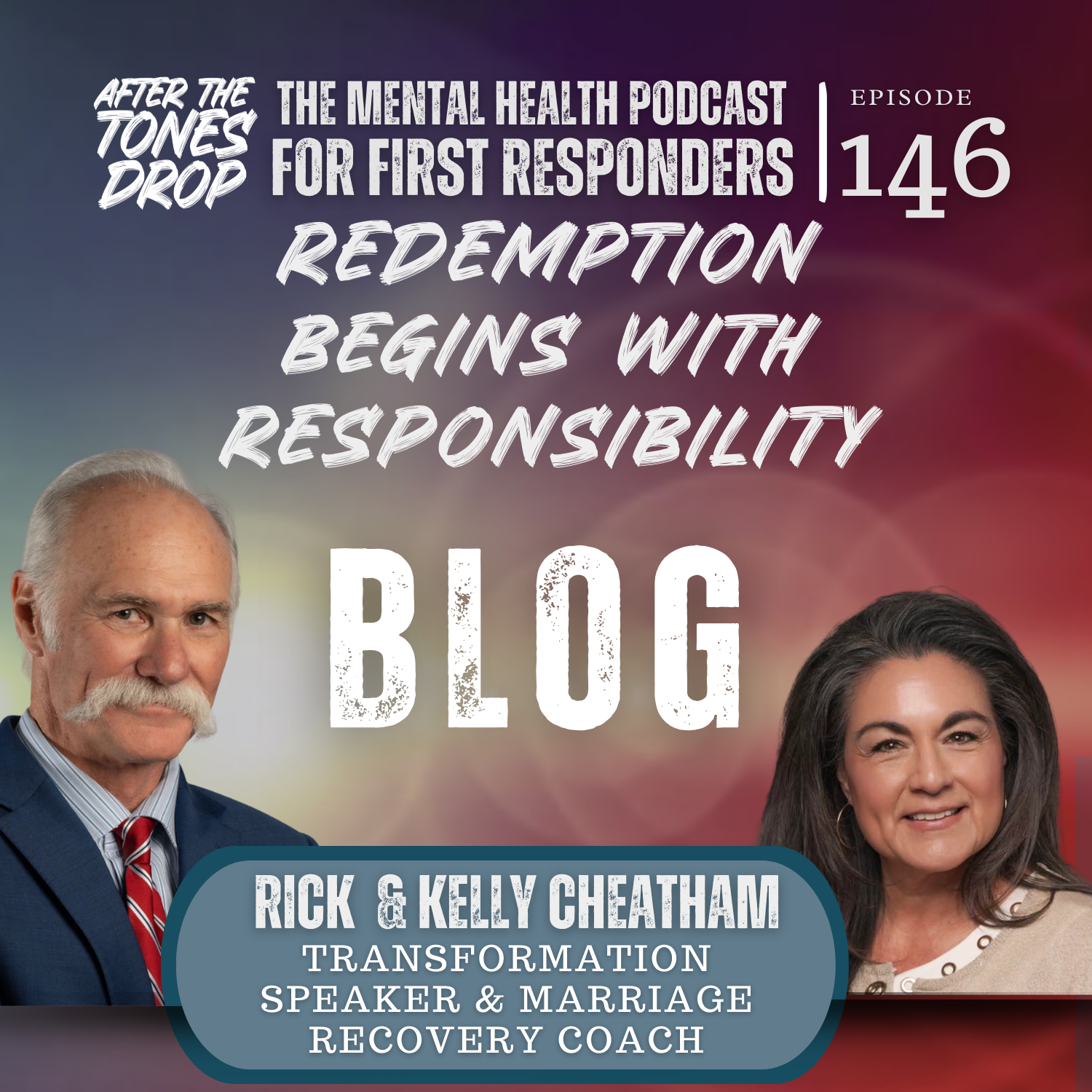
How Commitment and Forgiveness Rebuild Lives After the Fire
Most people wait for clarity before they move. Rick Cheatham didn’t have that luxury.
What he had was a criminal record, a sexual addiction, a marriage hanging by a thread, a son murdered, and later a broken neck that left him temporarily paralyzed from the chest down. He had seasons where the only thing louder than the pain was the temptation to quit. This episode is not about polished redemption. It is about what actually works when life burns down and you are standing in the wreckage with no clean exit.
Rick’s philosophy is simple and brutally honest: start where you stand. Not where you wish you were. Not where you used to be. Not where you plan to be once you “get it together.” Start where you are. That principle runs through every part of this conversation.
Commitment Isn’t a Feeling. It’s a Decision With No Backup Plan.
Rick and Kelly don’t romanticize marriage. They tell the truth about it.
For ten years, Rick lived a double life that included pornography, strip clubs, and prostitution. Kelly didn’t discover everything at once. It came in layers, each one eroding trust. Eventually she drew a clear boundary: get this fixed or I’m out. Not dramatic. Not hysterical. Just done pretending.
What changed wasn’t guilt. It was commitment without options.
Rick says something in this episode that lands hard: your results reveal what you’re truly committed to. Not your intentions. Not your explanations. Your outcomes.
When commitment has a back door, people use it. When it doesn’t, behavior changes.
For first responders especially, this hits home. The job trains you to endure, compartmentalize, and push through. But endurance without repair eventually breaks something.
Kelly’s strength wasn’t in tolerating dysfunction. It was in setting boundaries while refusing to turn Rick into her enemy. She learned to fight the behavior, not the person. That shift alone changed the trajectory of their marriage.
Forgiveness Isn’t Soft. It’s Survival.
Rick learned forgiveness from a mentor who had no legs and one arm. That mentor told him, “You are never justified in holding onto resentment.”
Rick didn’t want to hear that.
He held resentment toward himself, toward God, toward the man who murdered his son Michael. That resentment nearly destroyed him. Forgiveness didn’t excuse what happened. It released the poison that was keeping him stuck.
Kelly’s forgiveness came through a different path. After Michael’s death, she sobbed daily for ten months. She lost hair. She wrestled with thoughts she never thought she’d have. Forgiveness for her wasn’t instant peace. It was choosing not to let bitterness define the rest of her life.
This matters for anyone carrying cumulative trauma. Bitterness feels protective. It isn’t. It anchors you to the worst moment of your life.
Forgiveness doesn’t erase the story. It gives you your future back.
S.T.A.R.T. Where You Stand: Fireground Wisdom for Real Life
Rick’s “S.T.A.R.T. Where You Stand” framework takes fire service principles and applies them to personal crisis.
On a fireground, you don’t wait for perfect conditions. You assess. You act. You adapt.
Self-awareness comes first. Take responsibility for how you’re interpreting your reality.
Then comes transformational thinking. Shift from victimhood to agency.
Action follows, with boundaries, routines, and honest conflict resolution.
Resilience is built through what you survive together, not what you avoid.
Thriving comes later. Only after the hard work is done.
The Takeaway: Redemption Begins With Responsibility
What struck me most in this conversation wasn’t the magnitude of the adversity. It was the refusal to outsource responsibility. Rick's son was murdered, then he broke his neck five months after retirement. He could have built a life around resentment. Instead, he chose purpose.
In this conversation I was reminded that fear doesn't have to be a wall, it can also be a door: especially when you are talking healing from addiction. You don’t need a perfect plan. You don’t need to feel ready. You need the courage to take responsibility for the ground you’re standing on right now.If your life feels like it burned down, stop waiting for better conditions.
Start where you stand.
🎧 Listen to the full Episode 146 of After the Tones Drop to hear Rick and Kelly’s story in their own words. This isn’t a quick motivational hit. It’s a masterclass in rebuilding when quitting feels easier.

Host
Cinnamon has spent over 25 years in the trenches of trauma work—but for the last eight, she’s been all-in with one mission: making sure the people who run toward chaos have somewhere to land when the dust settles.
She’s a trauma therapist, a trainer, and a national speaker on first responder mental health. From firehouses to squad rooms to conference stages, she shows up with honesty, respect, and the tools to help responders move from surviving to actually living.
And here? She’s your host.
After the Tones Drop is her raw, unfiltered podcast built for the first responder community. Because staying alive isn’t enough. Her work is about reclaiming life—on your terms.

When Help Feels More Threatening Than Silence
