
When Help Feels More Threatening Than Silence
First responder silence is often misunderstood.
They think if someone is not talking, it means they are in denial. Or prideful. Or too stubborn to admit they are struggling. Sometimes that is true. But a lot of the time, silence is not about ego. It is about survival.
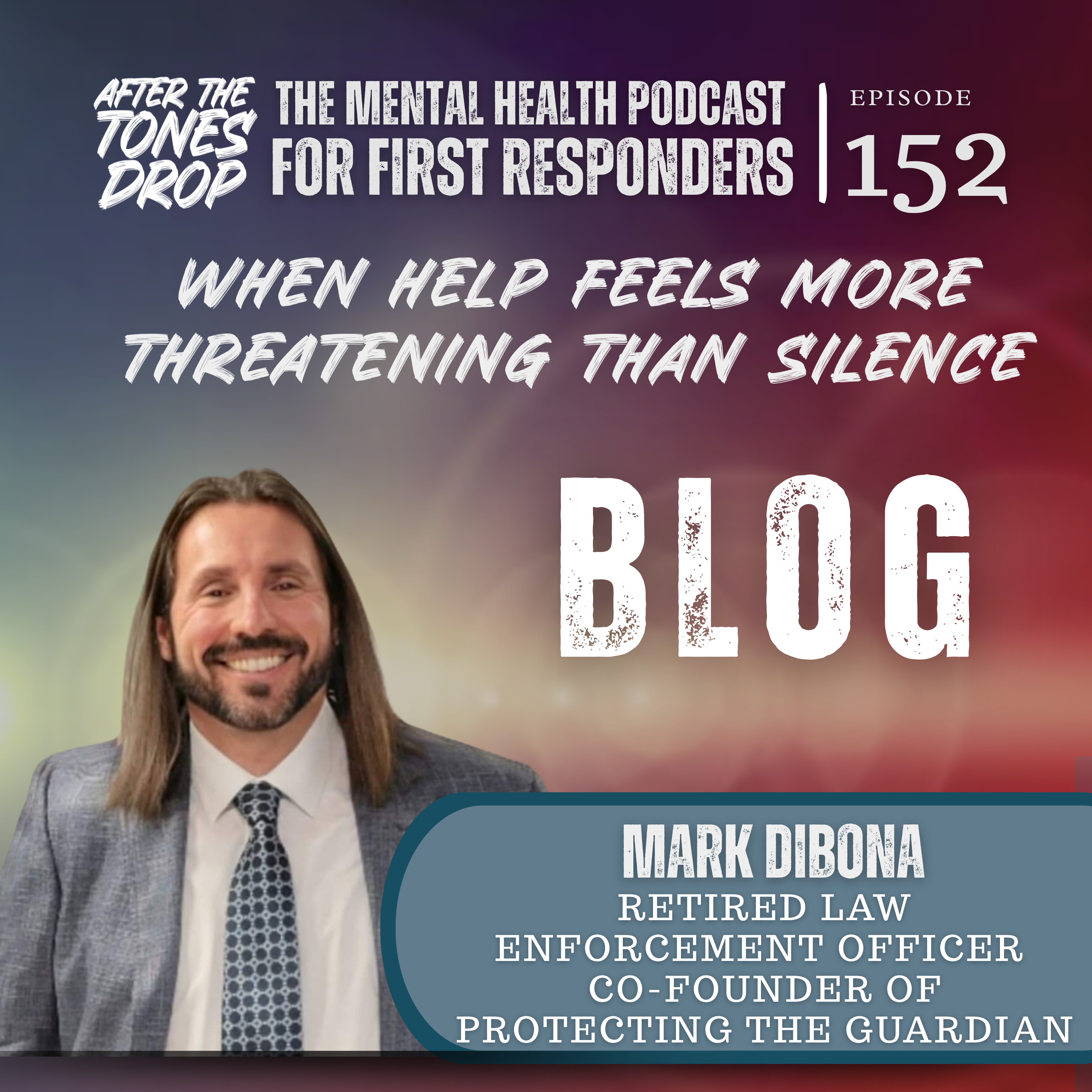
That is what stood out to me in my conversation with Mark DiBona on Episode 152. Not just the pain he was carrying, but how believable it was that staying quiet could feel safer than telling the truth. And if we are being honest, that is still the problem in too many first responder spaces.
Silence Feels Strategic
First responders are not afraid of hard things. They run toward what most people avoid. Blood. Death. Trauma. Chaos. Responsibility. Split-second decisions that can change everything.
That is not what makes them go quiet.
What makes them go quiet is the fear of what honesty might cost them. If I say I am not okay, will I still be trusted? Will I still be respected? Will people start looking at me differently? Will this follow me into my assignment, my reputation, or my place in the room?
That is the real calculation.
When someone is already drowning emotionally, and the culture around them still treats vulnerability like liability, silence starts to feel like the smarter option. It may not be healthy, but it feels controlled. It feels strategic. It feels like the one thing they can still manage when everything else feels uncertain.
That is why telling first responders to “just ask for help” is not enough. If help feels like exposure, and exposure feels dangerous, many of them are not going to reach for it early. They wait until the pain is louder than the fear. They wait until the options feel smaller. They wait until staying alive takes more energy than they know how to give.
That is not denial. That is survival logic.
The Job Rewards Control
A lot of first responders are not just praised for being strong. They are praised for being controlled. Composed. Unreadable. The person who can keep moving no matter what is going on inside.
That posture absolutely has value on the job. But when it becomes your whole personality, it starts costing you.
You stop talking honestly. You stop reaching out. You stop letting people see what is actually happening under the surface. From the outside, it can look like resilience. From the inside, it can be collapse.
That is part of what makes first responder mental health so difficult to read. A person can be deeply unwell and still look operational. They still show up. They still do the job. They still joke around. They still hit the tasks in front of them. Everyone assumes they are fine because they are functioning.
But functioning is not the same thing as being safe.
Sometimes it just means they are disciplined enough to keep bleeding quietly.
Help Has to Feel Safer Than Secrecy
This is where the culture piece matters. If we want first responders to speak up sooner, then help has to feel safer than silence.
That means more than putting a poster on the wall or sending out a hotline number. It means building environments where people can tell the truth without immediately feeling like they just detonated their own career. It means peers who do not disappear when the conversation gets uncomfortable. It means leaders who know how to stay steady when someone says something hard.
If someone admits they are struggling and your first response is panic, distance, gossip, or some version of “be careful what you say to me,” you have just trained everyone watching to shut up.
That is how silence gets reinforced.
Sometimes the most helpful thing you can say is not brilliant or clinical. Sometimes it is simply, “I’m glad you told me.” That sentence matters because it lowers the threat level. It tells the nervous system this conversation is survivable. It tells the person in front of you that they do not have to manage your reaction while they are trying to survive their own pain.
That is where real support starts.
We Still Make Honesty Too Expensive
Mark’s story points to something bigger than one person’s struggle. It points to a system problem. Too many first responders still live inside cultures where telling the truth feels riskier than holding it in.
And if that is still true, then we have not solved the real problem.
We have just gotten better at talking about mental health while keeping the old rules in place.
If honesty still costs too much, people will keep choosing silence. They will keep waiting. They will keep convincing themselves they can manage it alone. And some of them will wait too long.
That is why this conversation matters.
It is not just about suicide. It is not just about one bad incident or one breaking point. It is about the emotional math first responders do every day when they are hurting and trying to decide whether it is safer to tell the truth or safer to stay quiet.
Too often, quiet still wins.
The Real Question
So maybe the question is not whether first responders are willing to ask for help.
Maybe the better question is whether we have built environments where asking for help actually feels survivable.
Because if help still feels more threatening than silence, then the work is not done. Not even close.
If you want to understand why so many first responders wait too long to speak, listen to the full conversation with Mark DiBona. It is honest, uncomfortable, and necessary.
🎧 Listen to Episode 152 here:
https://www.afterthetonesdrop.co/mark-dibona
Contact Mark at https://protectingtheguardian.com


Host
Cinnamon has spent over 25 years in the trenches of trauma work—but for the last eight, she’s been all-in with one mission: making sure the people who run toward chaos have somewhere to land when the dust settles.
She’s a trauma therapist, a trainer, and a national speaker on first responder mental health. From firehouses to squad rooms to conference stages, she shows up with honesty, respect, and the tools to help responders move from surviving to actually living.
And here? She’s your host.
After the Tones Drop is her raw, unfiltered podcast built for the first responder community. Because staying alive isn’t enough. Her work is about reclaiming life—on your terms.

What Actually Pushes First Responders to the Edge

