When Someone You Care About Doesn’t Survive: What No One Tells You About Grief in the Work We Do
Grief After Suicide Loss: What Helpers Need to Know
There are moments in this work that stop you cold. Moments that change you. Moments you don’t see coming, even when you think you’ve seen it all.
And then there are the moments you never forget—because they break something open inside you.
This episode was born from one of those moments.
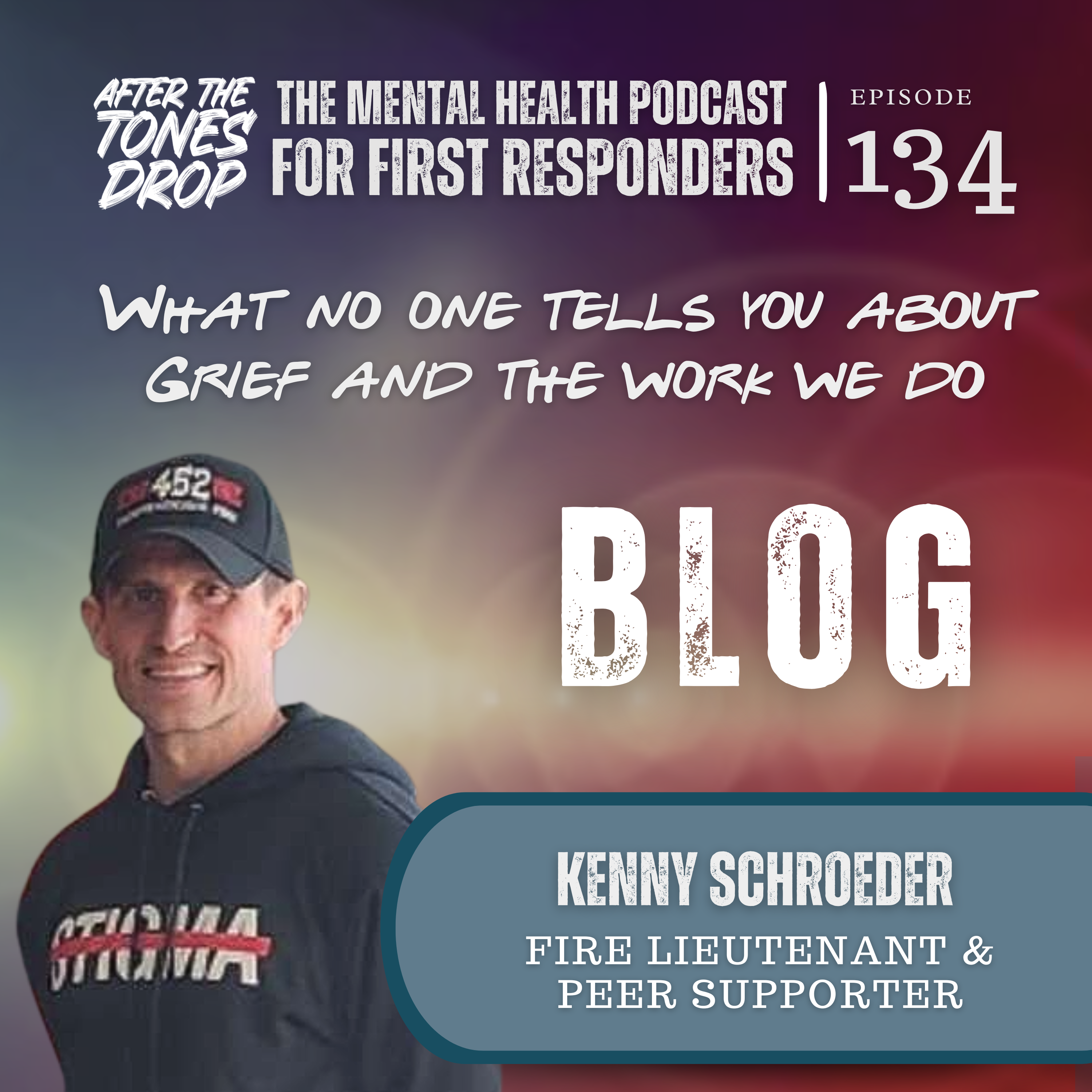
Today, I’m sharing a conversation between me and my friend Lieutenant Kenny Schroeder about the kind of loss you can’t prepare for: when someone you care about doesn’t survive. When you get the call you prayed you’d never get. When all the training, expertise, and years of doing the work can’t protect you from the reality that you’re still human.
This isn’t a conversation about symptoms or protocols. It’s a conversation about grief, responsibility, self-blame, and what it means to keep showing up in a profession where the cost of caring is real.
This one is personal.
The Invisible Weight Helpers Carry
One of the biggest myths in this world of helping, serving, coaching, and supporting others is the idea that we’re somehow supposed to be insulated from the pain we witness.
That if you’ve been doing this long enough, you should be able to compartmentalize it.
Move on.
Shake it off.
Stay strong.
But when I lost a client to suicide, none of that was true. The first wave was shock. Then questions. All the “what ifs” and “should I have seen this” and “could I have stopped it.” It didn’t matter how many years I’d been doing this or what I intellectually knew about suicide. My heart still broke. My mind still spiraled. My humanity still took over.
Kenny was one of the first people who saw me in that space. Not the coach. Not the clinician. Not the professional. Just me—shaken, grieving, trying to make sense of something senseless.
In this episode, we break open something most helpers never say out loud: losing someone affects us. Deeply. It doesn’t make us weak. It makes us human.
And pretending it doesn’t hurt only makes the hurt bigger.
You Can’t Save Everyone... And Carrying That Burden Alone Will Crush You
There is a sentence in this episode that I hope gets burned into your bones the way the truth of it did into mine:
“The only suicide I can prevent is my own.”
Because the truth is, no matter how much we care, no matter how hard we fight, no matter how available, trained, compassionate, and devoted we are—there are outcomes we cannot control. There are choices we cannot override. There are battles people fight inside themselves that we do not get to win for them.
And yet so many helpers walk around with a quiet, crushing sense of responsibility.
“If I had answered sooner…”
“If I had pushed harder…”
“If I had known one more thing…”
“If I had just done something different…”
Self-blame becomes the invisible backpack we carry, heavy enough to break us.
But here’s the truth we talk through in this episode: you can only give what you have. You can only show up fully present, loving, grounded, and skilled. And sometimes, that still isn’t enough to change the outcome.
That doesn’t mean you failed.
It means you're not God. You’re not all-powerful. You’re not in control of someone else's story.
You’re a human being doing meaningful work in a broken world.
Healing Requires Community
Loss—especially suicide loss—doesn’t end with the person who’s gone. It ripples. It transfers. It settles into the hearts of the people who loved them, worked with them, and tried to help them.
But too often, helpers deal with that pain privately.
We push through.
We tough it out.
We pretend the ache isn't there.
This episode is a reminder that grief deserves space. That talking about it isn’t weakness. That peer support, community, and vulnerability aren’t optional—they’re life-saving.
Kenny talks about the role he plays as a peer supporter and how sitting with someone in their grief is an act of courage. He shares how showing up for each other after a loss is part of how we survive this profession.
And we talk about what it means to normalize these conversations, especially in the first responder world where silence has been the standard for far too long.
Grief is love with nowhere to go. It needs a place to land.
Let it land with people who can hold it.
A Final Word: This Is Hard Because It Matters
If you’ve ever lost someone to suicide, or if you’ve ever blamed yourself for an outcome you couldn’t control, I want you to hear me when I say this:
You are not alone.
You are not broken.
You are not expected to carry the unbearable by yourself.
Grief doesn’t make you weak.
Crying doesn’t make you unprofessional.
Asking for support doesn’t make you incapable.
Being affected means you cared—and that is never the wrong thing.
Your humanity is not a liability.
It is your strength.
Listen to the Episode. Share it with Someone Who Needs It.
Episode 134 is raw, honest, and necessary. If you’re a helper, healer, responder, clinician, coach, or someone who simply carries the weight of caring deeply for others—this conversation is for you.
🎧 Listen now.
📣 Share it with a colleague, a friend, or someone who needs the reminder that they’re not alone.
Your story matters. Your grief matters. And your heart matters.
Always.


Host
Cinnamon has spent over 25 years in the trenches of trauma work—but for the last eight, she’s been all-in with one mission: making sure the people who run toward chaos have somewhere to land when the dust settles.
She’s a trauma therapist, a trainer, and a national speaker on first responder mental health. From firehouses to squad rooms to conference stages, she shows up with honesty, respect, and the tools to help responders move from surviving to actually living.
And here? She’s your host.
After the Tones Drop is her raw, unfiltered podcast built for the first responder community. Because staying alive isn’t enough. Her work is about reclaiming life—on your terms.
The Firefighter Behind the Gear: Why Wellness Is a Readiness Issue