The Trusted Adult Every Kid Deserves with Michael Chas
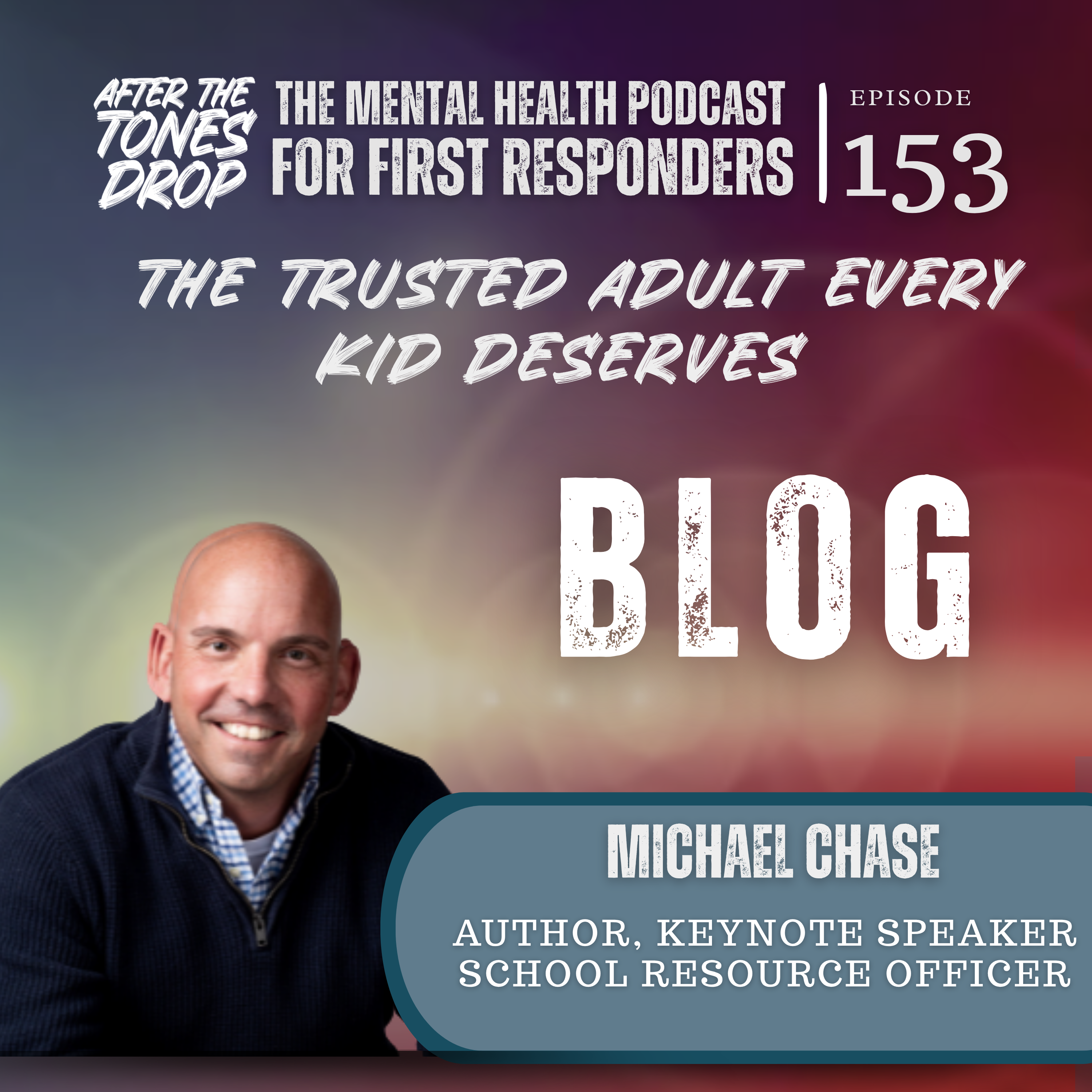
In Episode 153 of After the Tones Drop, I sat down with Michael Chase, a man whose life was shaped by service, interrupted by trauma, and redirected by purpose. He survived the Boston Marathon bombing. He built a career across both education and law enforcement. And now, through his Trusted Adult work, he is helping schools and communities rethink what safety actually means.
And here is the part that lands hardest for me.
Michael is not talking about safety in the abstract. He is not throwing around polished language from a podium. He is talking about what he lived, what nearly took him out, and what he learned by staying in the work long enough to see what really changes outcomes.
At the start of the conversation, he tells the story of standing near the finish line at the Boston Marathon when the second bomb went off just feet away from him. He describes the smoke, the fire, the ringing in his ear, the confusion, and the devastation. And then he says something I have not been able to shake: the planter beside him is the reason he is still here. Because he was on blood thinners at the time, even a relatively small injury could have turned catastrophic. That planter, as simple and ordinary as it sounds, saved his life.
That is the kind of story that could leave someone buried in the aftermath forever.
Instead, Michael turned toward people.
That does not mean it was clean or quick. It does not mean trauma magically became purpose overnight. In fact, he is honest about how brutal the road was. He talks about not sleeping, not eating, obsessively watching footage, and trying to make sense of a day that shattered him. He also talks about how that experience reignited something in him and ultimately pushed him back toward the path he thought had been closed for good.
That is what makes this episode so strong. It is not just a survival story. It is a story about what happens when pain meets responsibility, and responsibility turns into service.
Safety starts with relationships
When people ask Michael how we stop school violence, his answer is not complicated.
Relationships.
Not because training does not matter. Not because procedures do not matter. Not because lockdown plans are irrelevant. He is clear that those things exist and they matter. But he is even clearer that the strongest layer of prevention is relational. He says the most important thing on campus is relationships, and that if students take nothing else away from his school safety talk, he wants them to know this: the people there want to help them.
That matters.
Especially for first responders, law enforcement, school resource officers, clinicians, and anyone else who works around trauma, risk, and youth behavior. We are often trained to think in terms of response. Michael is asking us to think in terms of connection before crisis. He is pulling the lens back and saying that safety is not just about what you do when everything goes wrong. It is about whether someone feels known enough to speak up before it does.
That is not soft thinking. That is strategic thinking.
And frankly, it is long overdue.
A trusted adult is a protective factor, not a title
One of the most important parts of this conversation is how Michael defines a trusted adult. It is not the most popular staff member. It is not automatically the cop, the counselor, or the principal. It is the person a student believes they can go to about themselves or someone else when something feels wrong, and trusts that person to help or get help.
That distinction is everything.
Because adults love to assume they know which relationships matter. Schools do this. Agencies do this. Families do this. Systems do this all the time. We decide who the “right” point person should be, and then we get confused when the actual human being in distress chooses someone else.
Michael learned that the hard way when he first tried to build his trusted adult process by asking staff to identify which students they believed trusted them. On paper, the numbers looked good. But the data was wrong, because it was built on adult assumption instead of student reality. He calls that his fatal flaw in the first attempt. So they changed the process. They asked the kids directly. They expanded the list to include every staff member, from school resource officers to bus drivers to food service workers, because trust does not always form where adults expect it to.
That is such a needed correction.
Who are we to decide that a teenager should trust the English teacher more than the bus driver they see every single day?
Who are we to assume that because a person has the right credentials, they automatically have relational access?
Michael even shares the example of a student whose trusted adult was the bus driver on Route 13, even though the student did not know his actual name. He just knew that was his person. That is not small. That is the whole point.
A trusted adult is not a role.
It is a felt sense of safety.
You do not have to solve the whole problem to change the outcome
This is where the episode gets really practical.
Michael talks about the concern some administrators had around trusted adult programs, especially the fear that staff would be put in situations they were not equipped to handle. His response is one I wish more systems understood: if a young person comes to you, that does not mean you have to solve everything yourself. It means your job is to hear them, take it seriously, and help connect them to the right support. He says it plainly: “We have a network of people around us that are gonna help us figure out whatever it is.”
That is leadership.
Not ego. Not pretending. Not overpromising. Just steady, grounded responsibility.
For first responders especially, this is a powerful reminder. A lot of us have been conditioned to believe that if we cannot fix it immediately, we are failing. But often the first job is not fixing. It is noticing. It is staying present. It is making sure the person in front of you is not alone with it anymore. Michael’s entire approach reinforces that support is not about being everything. It is about refusing to let the person fall through the cracks.
That applies in schools. It applies in homes. It applies in marriages. It applies in peer support. It applies in first responder culture, where too many people still believe they have to carry everything themselves until they collapse.
Sometimes the most protective thing you can do is become the bridge.
Not the hero. The bridge.
Why this conversation matters
What makes Michael Chase so compelling is that he embodies the overlap so many people struggle to explain. He understands law enforcement. He understands education. He understands trauma. He understands service. And he has lived enough life to know that the strongest intervention is often relational, not performative.
He also carries the kind of humility that makes people listen. He is not trying to sound impressive. He is trying to make a difference. That comes through in every part of this conversation, from the way he talks about his path to policing to the way he talks about students, staff, and the adults who show up for kids every day in ways that may never make headlines.
And honestly, that is part of why this episode hit me the way it did.
Because underneath the bombing story, underneath the career story, underneath the school safety conversation, there is a bigger truth running through all of it:
People change outcomes.
Safe people. Present people. People who know how to listen. People who stay. People who take the next right step.
That is what Michael is building.
If you work in law enforcement, education, mental health, peer support, or any role where people bring you their hardest moments, this episode is worth your time. And if you have ever wondered what actually helps prevent tragedy before it escalates, this conversation gives you a real answer.
Listen to the full episode of After the Tones Drop with Michael Chase and hear the whole story for yourself. It is honest, sharp, deeply human, and full of the kind of perspective we need more of in this work.
Listen here: https://www.afterthetonesdrop.co/Michael-Chase
Michaels Website: https://www.michaelchasespeaks.com

Host
Cinnamon has spent over 25 years in the trenches of trauma work—but for the last eight, she’s been all-in with one mission: making sure the people who run toward chaos have somewhere to land when the dust settles.
She’s a trauma therapist, a trainer, and a national speaker on first responder mental health. From firehouses to squad rooms to conference stages, she shows up with honesty, respect, and the tools to help responders move from surviving to actually living.
And here? She’s your host.
After the Tones Drop is her raw, unfiltered podcast built for the first responder community. Because staying alive isn’t enough. Her work is about reclaiming life—on your terms.
ADHD, Trauma, or the Job? When the Symptoms Look the Same but the Reasons Are Different