The Poison of Resentment: Why Forgiveness Is a Survival Skill
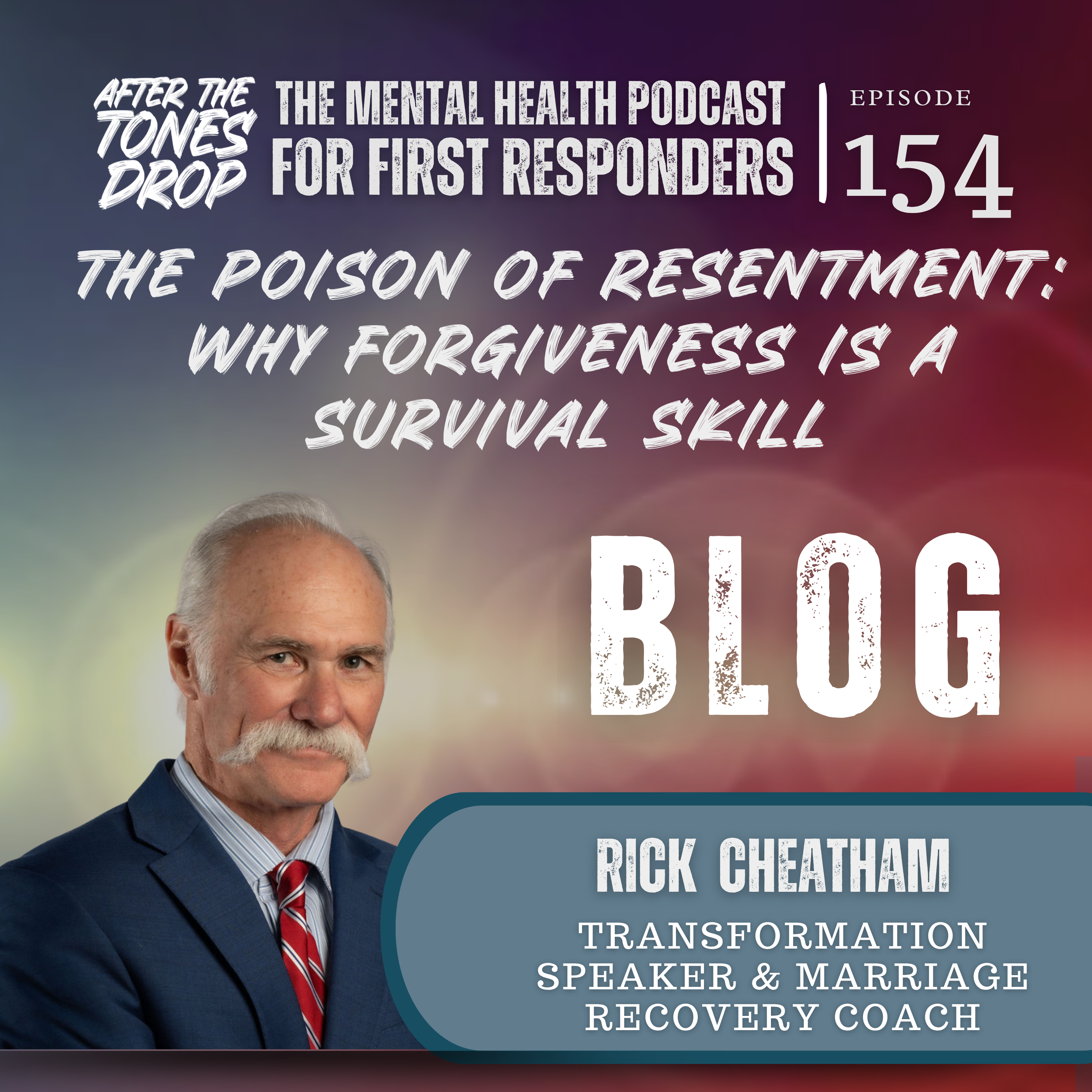
There are some losses that split your life in half.
Before this. After this.
Rick Cheatham has lived through more than one of those dividing lines. He has walked through addiction, financial devastation, the murder of his son, and a catastrophic injury that left him paralyzed from the chest down. And somewhere in the middle of all that, he came face to face with a truth most people spend their entire lives avoiding.
Resentment feels justified. It also feels like poison.
In my conversation with Rick, what stood out was not just the scale of what he survived. It was the way he talked about what bitterness was doing inside him. Not metaphorically. Not poetically. Physically. Spiritually. Relationally. He described it like poison running through his veins, and honestly, that is one of the clearest descriptions of unforgiveness I have heard in a long time.
This is not a blog about pretending bad things did not happen. It is not a blog about excusing harm. It is a blog about what happens when the pain is real, the loss is real, the anger makes perfect sense, and you still have to decide whether you are going to let it become your identity.
Resentment Always Makes Sense at First
That is the hard part.
Resentment usually starts in a completely understandable place. Someone betrayed you. Someone stole from you. Someone shattered something you can never get back. In Rick’s case, his son was murdered over something as senseless as twenty thousand dollars’ worth of product, and he was left carrying not only the grief of losing a child, but the rage that comes from knowing another person’s selfishness created a wound your family would never fully stop feeling.
Of course he felt justified in hating that man. Most parents would. Most human beings would.
That is what makes forgiveness such an offensive conversation when it comes too early or gets handled badly. People hear forgiveness and think you are asking them to minimize the harm, skip the grief, or get spiritual before they have even been honest about the devastation. That is not what Rick is saying, and it is not what I am saying either.
What he is saying is much sharper than that. He is saying resentment may be understandable, but it is not sustainable. At some point, the thing that was helping you feel morally right starts quietly turning you into someone bitter, angry, rigid, and trapped. He said a mentor told him, “You’re never justified to hold onto resentment,” and that line stopped me. Not because it is soft. Because it is ruthless in the best possible way.
It forces the question most of us do not want to ask. Not “Was I hurt?” Yes, obviously. Not “Did that person do something terrible?” Maybe they absolutely did. The question is, “What is holding onto this doing to me now?”
That is where the work begins.
Forgiveness Is Not About Them. It Is About What You Refuse to Become
Rick says something in this conversation that deserves to be underlined. He talks about how his story changed when his focus changed. When he stopped centering his life around resentment and started asking what he could learn through the lesson, his story shifted. And when his story shifted, his life shifted with it.
That is the piece people miss.
Forgiveness is not a reward you hand to someone who earned it. It is a line you draw around your own soul. It is the decision that says, “What happened to me is real, but I refuse to let it turn me into a prisoner of bitterness.” Rick put it even more bluntly. He said he could either spend the rest of his life in the prison of resentment, bitterness, anger, and hostility, or he could let it go.
That language matters.
Because so many people think unforgiveness keeps them connected to justice. Sometimes it just keeps them connected to the moment of injury. Sometimes it keeps them emotionally fused to the person who hurt them. Sometimes it becomes the very thing that robs them of peace, intimacy, clarity, and purpose.
And if we are being honest, first responders are especially vulnerable to this. You see too much. You carry too much. You already live in a profession that normalizes anger and control. It is very easy for resentment to start feeling like strength.
It is not strength.
It is corrosion.
Victimhood Can Become an Identity If You Let It
This is where Rick gets really direct, and I appreciate that. He talks about how easy it is to justify a victim state and then unconsciously build your life around it. He is not denying that victimization happens. It obviously does. His son was murdered. His neck was broken. He has lived through things most people would call unbearable. But he makes a clear distinction between experiencing pain and becoming committed to a victim identity.
That is a different thing.
When victimhood becomes your state of being, you lose agency. You become reactive. Bitter. Blaming. Stuck. Rick says it plainly: if you justify your state of being as a victim, then a victim is what you will become forever.
That is not harsh. That is clarifying.
Because pain wants to lie to you. It wants to convince you that because something terrible happened, you no longer have authorship over who you become next. Forgiveness interrupts that lie. It does not erase the pain. It just refuses to let pain be the only narrator left standing.
What This Means in Real Life
If you are reading this while carrying resentment toward someone who hurt you, I am not going to tell you to just let it go. That phrase is cheap and usually useless.
I am going to ask a better question.
What is it costing you to keep feeding it?
Is it making you more peaceful? More connected? More alive? Is it helping your marriage, your parenting, your sleep, your ability to be present in your own life? Or is it making you harder, angrier, more suspicious, more exhausted, and less available to the people who actually love you?
Rick’s story is powerful because it does not pretend forgiveness is easy. It shows why it is necessary. Not because the wound was small, but because the wound was big enough to ruin everything if he let it. And he decided he did not want to live that way.
That is what makes forgiveness a survival skill.
If this hits something raw in you, listen to the full conversation with Rick Cheatham. It is honest, heavy, and worth your time.
🎧 Listen here: https://www.afterthetonesdrop.co/154-rick-cheatham

Host
Cinnamon has spent over 25 years in the trenches of trauma work—but for the last eight, she’s been all-in with one mission: making sure the people who run toward chaos have somewhere to land when the dust settles.
She’s a trauma therapist, a trainer, and a national speaker on first responder mental health. From firehouses to squad rooms to conference stages, she shows up with honesty, respect, and the tools to help responders move from surviving to actually living.
And here? She’s your host.
After the Tones Drop is her raw, unfiltered podcast built for the first responder community. Because staying alive isn’t enough. Her work is about reclaiming life—on your terms.
What If My Personality Is Partly a Coping Strategy?: When ADHD Hides Behind Performance