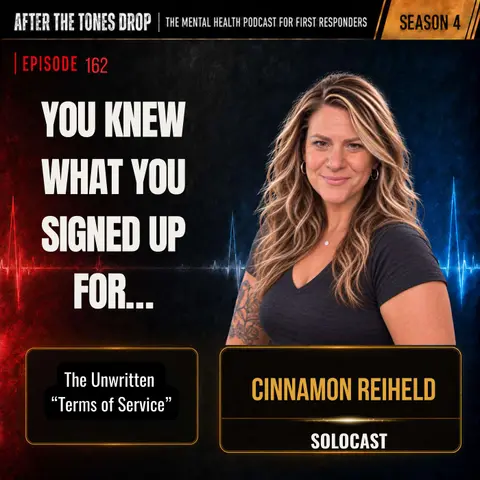
The Weight of “You Knew What You Signed Up For: And How It Gets Internalized and Weaponized
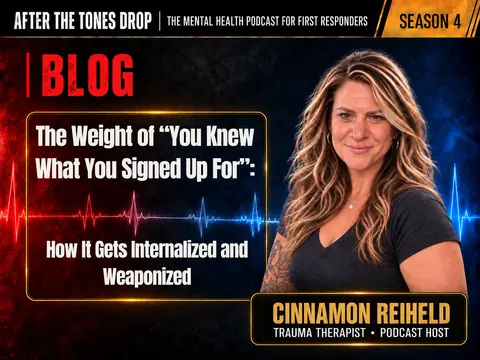
“You knew what you signed up for.”
Maybe.
You knew the job could be dangerous. You knew you might see people die. You knew there would be long shifts, missed holidays, difficult calls, public scrutiny, and decisions that had to be made before your brain had time to fully process what was happening.
But knowing what might happen is not the same as knowing what it will feel like when it does.
And it sure as hell is not the same as knowing what might happen next.
Nobody can fully prepare you for the call that follows you home. The investigation that leaves you questioning everything. The department that suddenly treats you like a liability. The moment the people you trusted become part of the trauma.
That part was buried somewhere in the unwritten terms of service.
We Knew the Duties. We Didn’t Know the Depth.
When people say, “You knew what you signed up for,” they are usually trying to end the conversation.
It sounds practical. Tough. Maybe even reasonable. But underneath it is often a much uglier message: You agreed to this, so you are not allowed to be affected by it.
You accepted the risk, so you forfeited the right to be surprised. You chose the profession, so whatever it costs you is now your problem.
That is bullshit.
First responders may accept occupational risk, but they do not sign away their nervous systems, marriages, identities, children, grief, fear, or right to fair treatment.
They do not agree to suffer quietly so everybody else can remain comfortable.
They do not promise that every traumatic experience will produce the emotional response the academy predicted.
Training can explain what might happen. It cannot tell you exactly what that experience will do to you.
The Job Description Doesn’t Include the Aftermath
When Giovanni Rocco went undercover inside the crime family that inspired The Sopranos, he knew the assignment could get him killed. That was the obvious danger. What he could not fully anticipate was the tidal wave that came afterward: living through multiple identities, moving his family, losing pieces of himself, and discovering what happens when the system you served no longer knows what to do with you.
He understood the potential event. He could not possibly know the full emotional, relational, and psychological cost until he was living it.
Ed Monroe knew the fire service was dangerous. But the danger that changed his department did not come from a burning building. It came from inside the brotherhood itself. That kind of trauma carries its own particular devastation because it destroys more than a sense of physical safety. It damages belonging. It disrupts trust. It forces people to question whether the structure they counted on was ever as solid as they believed.
And Justin Atherton knew that police work came with accountability and scrutiny. What nearly broke him was not a dangerous call. It was the internal investigation, the prolonged uncertainty, the isolation, and the collapse of an identity that had become inseparable from the job. Different uniforms. Different circumstances. Same painful lesson.
They told you what might happen. They did not tell you what might happen next.
Sometimes the Organization Becomes Part of the Injury
First responders are trained to expect danger from the public, from fire, from violence, from unstable scenes, and from circumstances no one can control.
They are not prepared for betrayal from inside the institution.
When an employee is struggling, organizations often focus immediately on behavior:
Why are they defensive? Why are they angry? Why are they shutting down? Why won’t they accept responsibility? Why are they suddenly so difficult? Those questions may be valid. Behavior still matters. Accountability still matters.
But leadership becomes dangerous when it treats every activated nervous system as a character defect.
Sometimes it is not attitude. It is activation. Sometimes what looks like defiance is fear. Sometimes what looks like avoidance is shame.
Sometimes what looks like indifference is someone trying desperately not to fall apart in front of the people determining whether they still have a career.
That does not mean we excuse harmful behavior. It means we become curious enough to understand what is driving it.
We need to hear people’s explanations, not so we can excuse the behavior, but so we can help them turn an excuse into a reason, locate their responsibility within it, and decide what needs to change.
That is accountability with a path forward.
How We Do Better
If you are in leadership, discipline should not be designed to maximize uncertainty.
Tell people what is happening. Tell them what the process will involve. Give them reasonable timelines. Update them when those timelines change. Do not isolate someone for weeks or months and then act surprised when their nervous system responds like it is under threat.
If corrective action is necessary, make the goal clear.
Are you trying to punish someone, protect the organization, or produce a safer and more capable employee?
Those are not always the same thing.
When possible, build coaching and education into the process. Help the employee identify what happened, what they were experiencing, what responsibility belongs to them, and what skills they need to respond differently next time.
And if someone has experienced a critical incident, do not assume the absence of an immediate emotional reaction means they are fine.
The body sometimes waits until the danger has passed before it presents the bill.
Recovery may begin days, months, or even years after the original event. That does not make the response exaggerated, manipulative, or weak. It makes it human.
Change the Sentence
Instead of saying:
“You knew what you signed up for.”
Try:
“You knew what might happen. You could not know exactly what it would feel like.”
That sentence leaves room for both responsibility and humanity.
It acknowledges that first responders chose difficult work without pretending they consented to every possible consequence.
It allows us to hold two truths at the same time:
You can be prepared and still be devastated.
You can be trained and still be afraid.
You can love the job and still be injured by it.
You can accept responsibility for your choices without accepting responsibility for every failure of the system around you.
No one knows the full contract when they sign it.
Eventually, life hands each of us a page we did not know was in the book.
When that happens, the least we can do is stop shaming people for being surprised by what it says. They should not have to read it alone.
Listen to “You Knew What You Signed Up For: The Unwritten Terms of Service.”
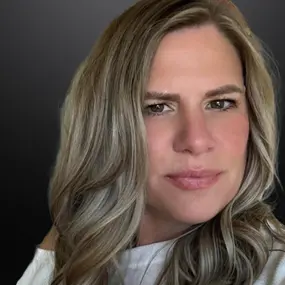
Host
Cinnamon has spent over 25 years in the trenches of trauma work—but for the last eight, she’s been all-in with one mission: making sure the people who run toward chaos have somewhere to land when the dust settles.
She’s a trauma therapist, a trainer, and a national speaker on first responder mental health. From firehouses to squad rooms to conference stages, she shows up with honesty, respect, and the tools to help responders move from surviving to actually living.
And here? She’s your host.
After the Tones Drop is her raw, unfiltered podcast built for the first responder community. Because staying alive isn’t enough. Her work is about reclaiming life—on your terms.
The Two-Month Exhale: When Your Body Stops but Your Brain Doesn’t